
When Should a Child See a Speech Therapist?

A Parent’s Guide for Ages 5–18
Many parents wonder whether their child will “grow out of” communication challenges or if it might be time to seek extra support. Speech and language skills play a role in how children learn, connect with others, and express their ideas, especially as academic and social demands increase.
This guide outlines common signs that speech and language support may be helpful for school-age children and teens, and explains what parents can expect when considering a speech therapy evaluation.
Signs a Child May Benefit From Speech Therapy (Ages 5–7)
In the early school years, communication demands increase quickly. A child may benefit from speech therapy if they:
Have difficulty following multi-step directions
Struggle to express ideas clearly or retell events
Continue to have speech sound errors that affect understanding
Become frustrated or avoid speaking when misunderstood
Have difficulty answering basic “who,” “what,” or “where” questions
At this age, support focuses on building clear speech, strong language foundations, and confidence with communication.
Signs to Watch for in Elementary & Middle School (Ages 8–12)
As language becomes more academic, challenges may become more noticeable. A child in this age group may benefit from speech therapy if they:
Struggle with reading comprehension or answering questions about what they read
Have difficulty organizing thoughts when speaking or writing
Use limited vocabulary or simple sentence structures
Find it hard to explain ideas, stories, or opinions
Experience challenges with attention, organization, or language-based learning tasks
Speech therapy at this stage often supports language skills that impact classroom learning and everyday communication.
Signs a Teen May Benefit From Speech Therapy (Ages 13–18)
Speech therapy is not just for younger children. Many teens benefit from targeted support as expectations increase in school and social settings. Signs may include:
Difficulty expressing opinions clearly or advocating for themselves
Challenges organizing thoughts for presentations, essays, or discussions
Trouble understanding figurative language, inferencing, or abstract concepts
Social communication difficulties that affect peer interactions
Language challenges impacting confidence or academic performance
For teens, therapy often focuses on practical, functional communication skills that carry into adulthood.
What If My Child Is Doing “Fine” in School?
This is one of the most common questions parents ask.
A child can earn passing grades and still experience language-based challenges. Many children compensate well early on, but as academic demands increase, longer assignments, complex texts, higher-level discussions; those challenges can become more noticeable.
Speech therapy isn’t about labels or deficits. It’s about understanding how a child communicates and whether additional support could help make things feel easier.
What Happens During a Speech Therapy Evaluation?
A speech-language evaluation is designed to provide clarity, not pressure. During an evaluation, a speech-language pathologist may:
Assess speech, language, and communication skills
Review academic and developmental history
Identify strengths as well as areas that may benefit from support
Discuss findings and recommendations with parents
The goal is to help families understand their child’s communication profile and decide on next steps that feel appropriate.
Considering Speech Therapy in King of Prussia, PA?
If you’re located in or near King of Prussia, Pennsylvania, working with a private speech-language pathologist can offer individualized support tailored to your child’s needs and goals. We offer online speech therapy across the state of Pennsylvania. Private speech therapy allows for focused attention, flexibility, and collaboration with families.
If you’re unsure whether speech therapy is the right fit, a consultation or evaluation can be a helpful starting point.
Frequently Asked Questions
Can a child need speech therapy without a diagnosis?
Yes. Many children benefit from speech therapy support even without a formal diagnosis.
Is speech therapy only for younger children?
No. Speech therapy can support communication skills at any age, including adolescence.
How long does speech therapy usually last?
The length of therapy varies depending on a child’s needs, goals, and progress.
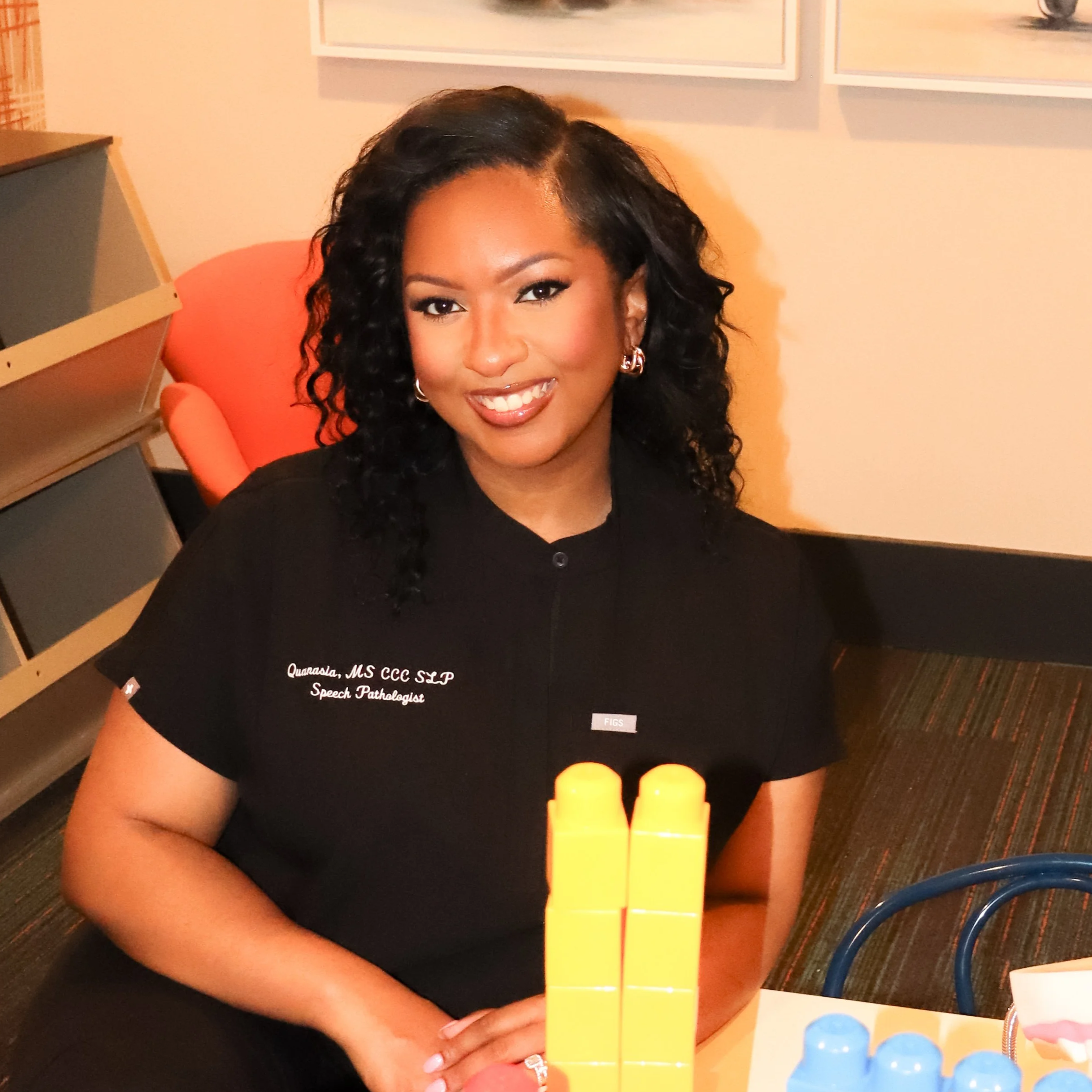
I’m Quanasia, a speech-language pathologist and the owner of The Claude Speech and Language Therapy. I provide private speech, language, and literacy support for children ages 5-18. I work with families who want individualized, thoughtful care that supports communication, learning, and confidence. Reach out today to learn more.